Slab Foundation Repair in Durham, NC
A slab-on-grade house in Durham, NC sits on concrete poured right onto the soil, so when that soil moves, the floor and the walls above can move with it. Slab requests come to us from all over Durham County, and we send each one to a local foundation specialist, who checks the floor and writes any estimate.
- No Cost to Request
- Written Estimates
- Local to Durham County & Nearby
- Crawl Space & Slab Homes
Not sure if we cover your area? Check now ↓
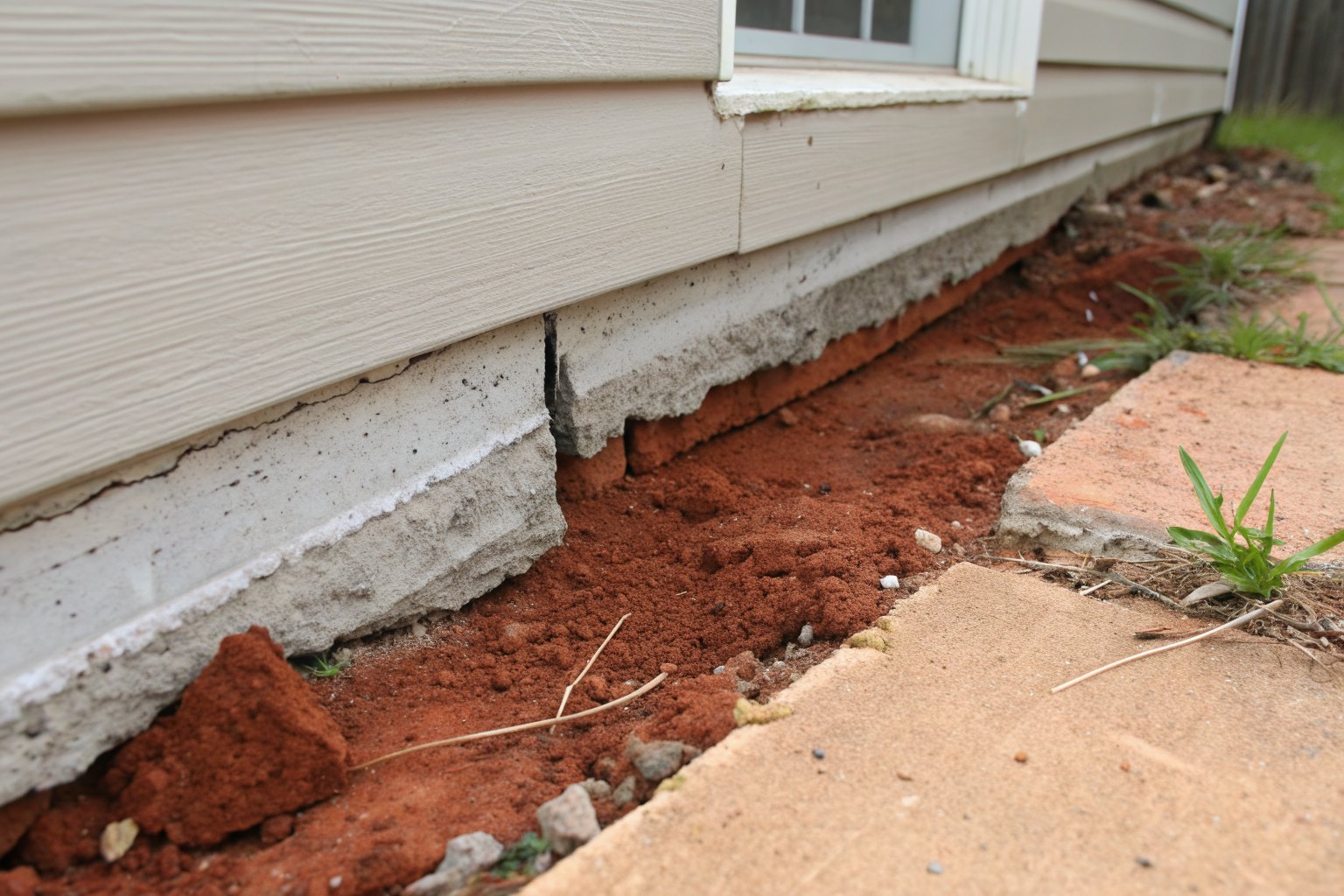
When a Slab-on-Grade Home Shifts
In this design the house stands on one layer of concrete, poured on the ground and usually thickened under the outside walls. Durham-area homes sit on slabs and over crawl spaces, and many newer Durham homes are slabs. Census survey data puts about 21% of the city's homes in the 2010s, its biggest building decade.
Edges often show trouble first. Clay along the outside dries out and takes on water sooner than clay under the middle, so a corner can settle in a dry stretch and rise again, called heave, when the ground gets wet. Parts of the Durham area sit on Triassic Basin rock, and federal soil descriptions rate clays formed from it, such as the Creedmoor soil series, high for shrink-swell; others, like the red Cecil clay, hardly move. Which kind a given lot has takes a soil test or the specialist's inspection to know.
A leaking supply or drain line under the slab can soak the clay in one spot, so if the water bill jumps or a patch of floor stays damp, a licensed plumber can run a leak test. The City of Durham calls local soil "very clay-rich, non-draining," which is why downspouts and grading deserve a check. Whether anything needs fixing is the specialist's call after a visit.
What This Slab Foundation Repair Work Covers
- Floor elevation readings. The specialist measures the floor at many points to map high and low areas before picking a method.
- Piers along the edge. Steel or concrete piers under a settled wall line carry the load down to firmer soil, and the slab can be raised onto them gradually.
- Slab lifting. Grout or foam injected under a settled section, such as part of a garage floor, can bring it back up but adds no deep support.
- Leak checks first. If a leak is suspected, ask whether a licensed plumber should test the lines before anything is lifted; the specialist does no plumbing work.
Pricing Slab Foundation Repair in Durham
All three rows come from a national home-cost site; there is no Durham-specific figure among them, and none is a price or bid from us. Only the specialist's written estimate, made after seeing the house, applies to yours.
| Cost row | Figure | Source (year) |
|---|---|---|
| Piers, per pier | about $1,000 to $3,000 | This Old House (2026) |
| Slab lifting (mudjacking) | about $550 to $1,300 | This Old House (2026) |
| Crack repair, per crack | about $250 to $800 | This Old House (2026) |
The cost calculator turns your footprint into a rough pier range, and the foundation repair cost guide lists every row.
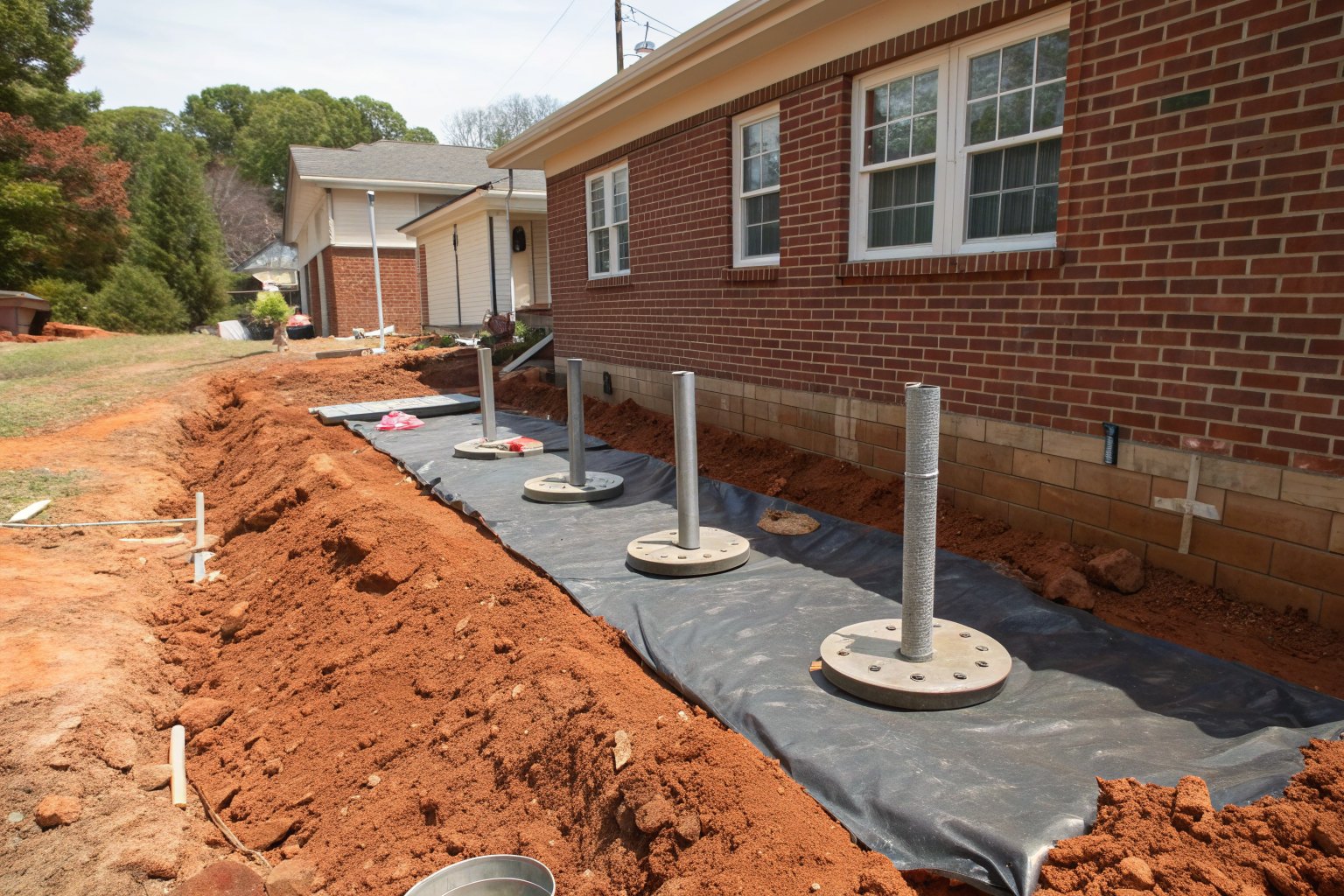
How Slab Foundation Repair Is Usually Done
- Send the request. Note the cracks or uneven floors on the form.
- Measure and look. The specialist takes floor readings, studies cracks in the slab, tile and walls, and checks where yard water runs.
- Rule out leaks. If the readings or the water bill hint at a leak, a licensed plumber can test the lines before any lifting is planned.
- Write the scope. The estimate should name the method, where each pier goes, any lifting or patching, drainage steps and warranty terms, and say whether an engineer's report figures in.
- Pull the permit. North Carolina treats a foundation as load-bearing, and repairs to load-bearing parts need a building permit no matter the cost. Durham's joint City-County Building & Safety office (919-560-4144) handles it for homes in the city and the county alike; ask the specialist who will apply.
- Do the work. The repair crew sets piers or injects under the slab, raises it in stages while watching the readings, then fills the access holes.
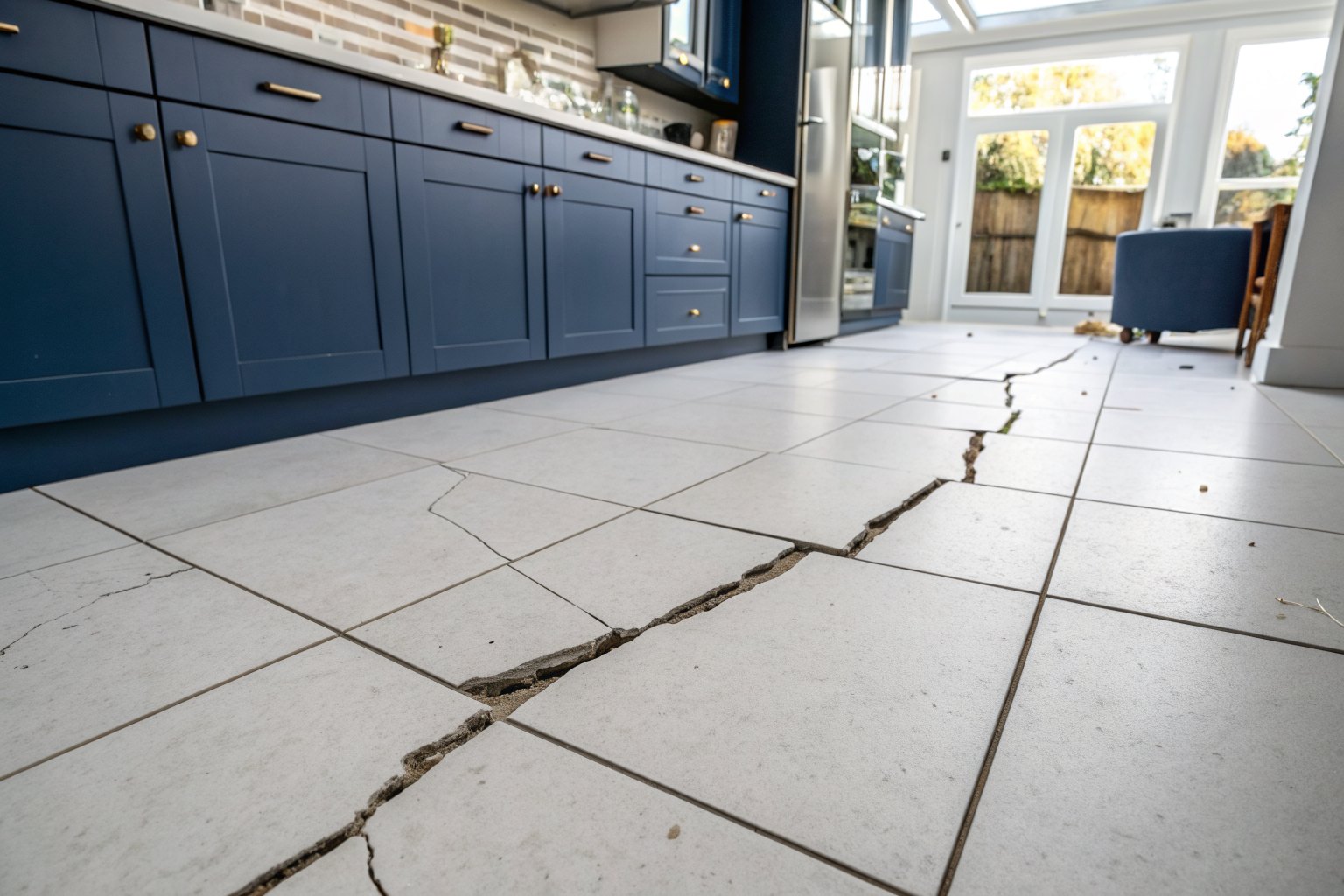
Why Homeowners Choose Slab Foundation Repair
A slab repair is meant to keep the floor you walk on, and the walls built on it, where they belong. Piers along a settled edge can help doors close and tile stay whole. Fixing a leak and the drainage around the slab can help the clay underneath stay evenly moist.
Before You Schedule Slab Foundation Repair
Is every crack in a slab a problem?
No. Thin shrinkage cracks commonly appear as fresh concrete cures, and many of them never change. Cracks that widen, run across tile or leave one side higher are more worth showing to a specialist. Pencil the date at each end of a crack to see whether it grows.
Can a slab be lifted without piers?
Sometimes. Lifting with grout or foam suits a shallow, settled section such as a walkway or part of a garage floor. It doesn't reach firmer soil, so where an edge keeps moving, the specialist may propose piers instead. Ask for the reasoning in writing.
Who handles a leak under the slab?
A licensed plumber. North Carolina requires a plumbing license for that work, so ask who will test the lines before slab work starts. A leak that keeps wetting the clay can undo a repair, so it belongs near the top of the plan, and the specialist does no plumbing work.
What about licenses and contracts?
The state's general contractor license reaches projects of $40,000 or more. If a slab job grows to that size, the NC Licensing Board for General Contractors can confirm whatever license number the specialist gives you. Smaller jobs sit outside that law, so lean on a written contract listing the price, the pier count and placement, dates, payment terms and warranty terms.
Work That Often Comes Next
You may also want foundation crack repair for wall and floor cracks, house leveling for rooms that tilt, the broader foundation repair page, or crawl space and pier and beam repair if part of the house is raised; the foundation warning signs quiz sorts symptoms in five questions.
Ask a Pro About Your Slab
Write a few lines about the floor, the cracks and anything odd about your water bill, then send them through the estimate request form. A local foundation specialist takes it from there, setting up any visit and putting the estimate in writing. The slab may need only watching; the next move is yours.